
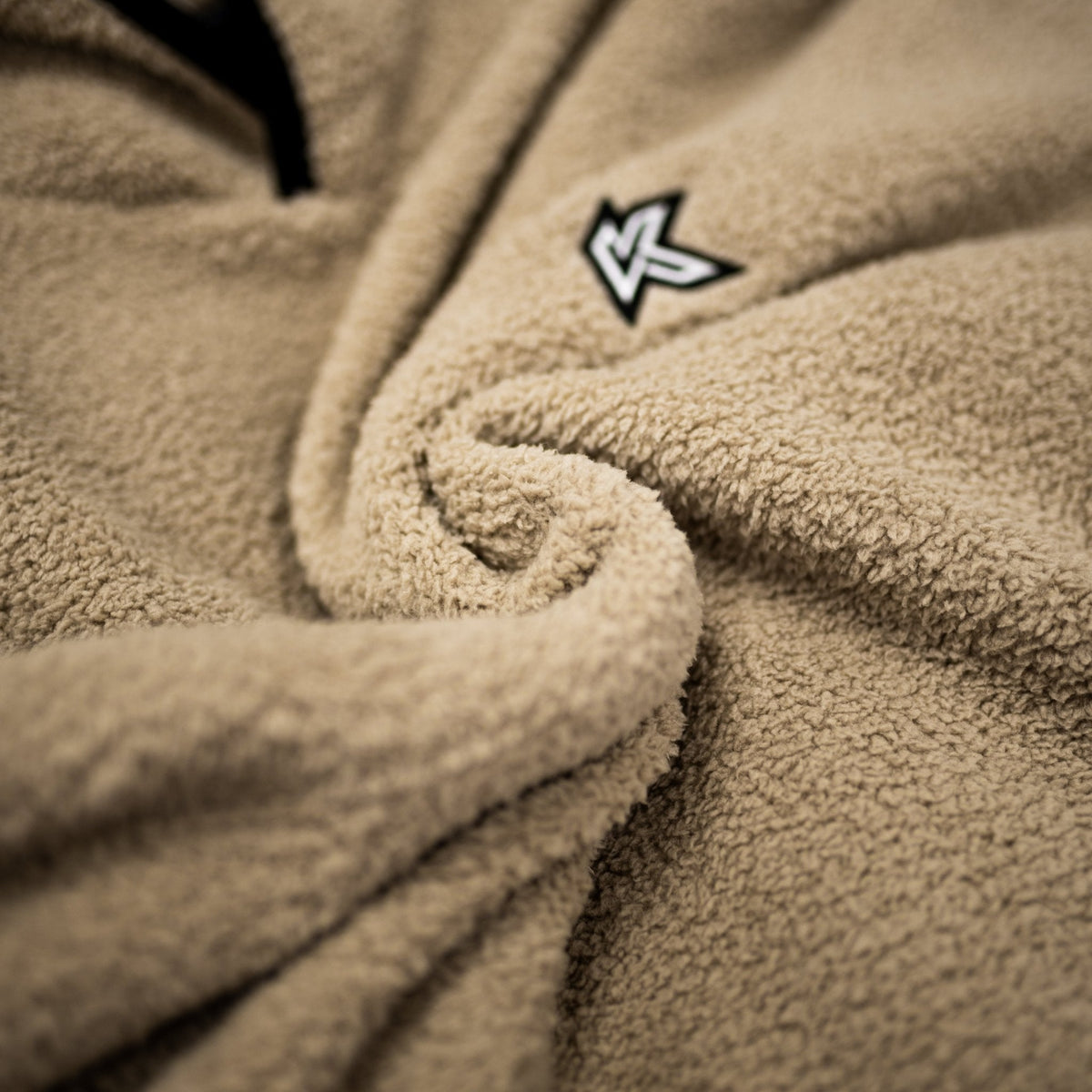
If you've been shopping for winter layers lately, you've probably seen the word "sherpa" plastered across jackets, hoodies, and linings everywhere. It sounds premium, it sounds cosy, but what does it actually mean? Here's everything worth knowing before you buy.
What Is Sherpa Fleece, Really?
Despite the name, sherpa fleece has nothing to do with the Sherpa people of the Himalayas. In clothing, "sherpa" refers to a specific type of fabric: a high-pile synthetic fleece, usually made from polyester, designed to look and feel like sheepskin wool without the price tag, the weight, or the itch.
It's got a deep, fuzzy texture with visible "naps" (the little loops or curls you can see and feel), which is where the wool-like look comes from. Most sherpa fleece today is made from recycled or virgin polyester, though you'll occasionally find cotton-blend versions too.
The short version: it looks and feels like shearling, but performs more like a well-made synthetic fleece. Lighter, easier to wash, and a lot more affordable.
Why People Rate It
A few reasons sherpa fleece has become a genuine winter wardrobe staple rather than a passing trend:
Warmth without bulk. The dense pile traps air close to the body, which is where the insulation comes from. You get noticeable warmth without the weight of a proper wool coat.
It moves with you. Unlike stiffer wool or heavily padded jackets, sherpa fleece flexes and stretches, so it doesn't restrict movement whether you're walking the dog, commuting, or working outdoors.
Low maintenance. It dries fast, doesn't need dry cleaning, and holds up to regular washing far better than real wool or shearling.
It looks the part. There's a reason it's everywhere right now: the texture reads as premium even though the fabric itself is practical and affordable.
Sherpa Fleece vs Regular Fleece vs Shearling
This is where most of the confusion comes from, so here's the straightforward version:
- Regular fleece (the smooth, brushed kind you'll know from classic zip-up jackets) is lightweight, breathable, and best for active layering — think 100-weight or 200-weight fleece for hiking or running in cooler weather.
- Sherpa fleece is a specific high-pile version designed to mimic wool. It's warmer for its weight than standard fleece and has that visibly fuzzy, textured surface.
- Shearling is the real thing: genuine sheepskin with the wool still attached. It's heavier, far more expensive, and needs proper care — sherpa fleece exists largely as a practical, affordable alternative to it.
If you're choosing between the three, the general rule is: regular fleece for high-output activity, sherpa for static warmth and everyday cosiness, and shearling only if budget and maintenance aren't a concern.
Understanding Fleece Weight (GSM)
You'll often see fleece described by its weight in grams per square metre (GSM). It's worth knowing what these numbers actually mean before you buy:
- 100 GSM (lightweight): Thin and breathable. Best as a midlayer for hiking, running, or cycling in mild cold.
- 200 GSM (midweight): The most versatile option. Warm enough to wear on its own on a crisp day, or layered under a jacket when it's colder.
- 300+ GSM (heavyweight): Maximum warmth, less breathability. Best for standing around in genuinely cold conditions rather than moving a lot.
Sherpa fleece linings tend to sit in the midweight-to-heavyweight range, since the whole point is static insulation rather than breathability during exercise.
Who It's Actually For
Sherpa fleece gets marketed hard at the outdoors and hiking crowd, but it's just as useful for:
- Dog walks and school runs in cold weather
- Commuting, especially if you're waiting around at bus stops or train platforms
- Casual everyday wear where you want warmth without looking like you're dressed for a mountain
- Layering under a shell or jacket on properly cold days
It's less suited to high-intensity exercise, where a breathable technical fleece or base layer will serve you better.
How to Look After Sherpa Fleece
The high pile that makes sherpa fleece so warm and soft is also the part that needs the most care:
- Check the label first — construction varies by brand and blend.
- Wash cold, on a gentle cycle. Heat can flatten or damage the pile over time.
- Skip the fabric softener. It clogs the fibres and reduces the loft that makes sherpa warm in the first place.
- Air dry where possible, or tumble dry on low. High heat is the main enemy of sherpa's texture and lifespan.
- Turn it inside out before washing if the sherpa is a lining rather than the outer fabric, to protect the pile from friction against other items.
Done right, a well-made sherpa piece should hold its texture and warmth for years.
The Bottom Line
Sherpa fleece earns its popularity honestly: it's warm, low maintenance, comfortable, and looks a lot more premium than its price point suggests. Whether you're after a midlayer for cold walks, a cosy lining for a jacket, or just something to throw on that doesn't feel like a technical piece of kit, it's one of the more practical winter fabrics you can buy.

Share:
How Often Should You Replace Your Underwear?